Living and Creating with Bipolar Disorder.
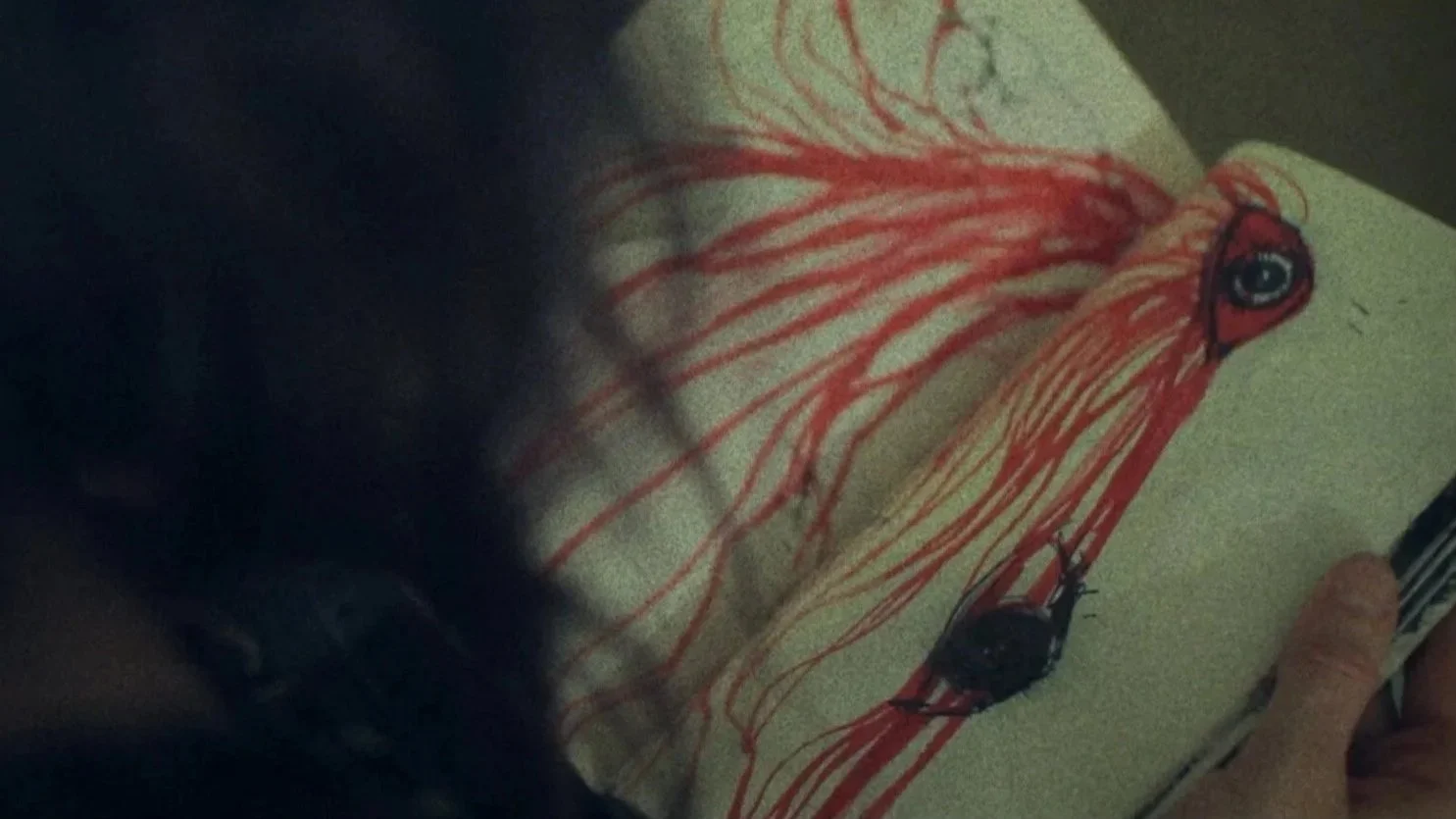
Still from A Tale of Delight. Artwork by Chris Koelle.
In 1992, the World Federation for Mental Health began World Mental Health Day. Since then, every October 10 is set aside to raise awareness and reduce the stigma faced by those living with mental illnesses. This year’s theme, “Lived Experiences Heard: Real Voices, Real Change,” focuses on giving people with lived experience (PWLE) a voice in driving a meaningful shift in how the world sees us.
“Us.” That’s not an easy thing to write.
Even though my work is regularly influenced by my struggles with mental health, most notably A Tale of Delight, it’s still challenging for me to discuss it so openly. I’m terrified to talk about something this personal, especially on a site focused on my work as a writer and director.
You see, I’ve been hurt in recent years by people with good intentions who misunderstood what a bipolar diagnosis means. Instead of trying to educate, I crumble and hide. I become ashamed, believing I’m somehow broken. On my good days, I can discuss it with my therapist and slowly move on. On my bad days, it poisons me. So, for a long time now, I’ve sensed a growing need to be open once again about what it’s like to juggle my work as an artist while living with bipolar disorder.
My hope in being vulnerable is to help others see it’s possible to navigate the creative cycle when our internal chemistry is constantly shifting.
What’s it like to be an artist with bipolar?
Cliché? That’s my first thought, though it isn’t helpful and only feeds the stigma.
We watch movies and read books about incredible artists who had or are suspected of having bipolar or some other mental illness and think that it’s somehow a gateway to better work. For years, I believed, perhaps subconsciously, that an artistic temperament required a volatile nature. To me, it was normal to focus so intensely on a project that you could stay awake for days, only to be paralyzed by a weight that made even getting out of bed feel next to impossible.
This just came with the territory, right?
But after multiple hospitalizations and, finally, a bipolar disorder diagnosis my relationship with my art changed. (Well, relationship with everything changed, but let’s stick to one subject here. This is a blog post, not an 80,000 word memoir, after all.) It forced me to realize I haven’t just used film to tell stories. I’ve used it to survive an invisible storm raging inside.
We tell stories through perspective. In cinema, our tools include, among countless other things, lenses to create an emotional reaction for the audience. Bipolar is having a lens inside my mind swapped. Frequently. Without permission.
When mania hits, I'm thrust into an MCU blockbuster, looking at my world through a $100,000 lens.
And it’s epic.
Welcome to a high-octane ride, dude. A complete psychedelic trip that nobody can stop. Here, ideas don't just come to me; they crash into each other, leaving behind brilliant new colors that explode onto the screen. Colors that no human has seen before. And the best thing? It’s all a masterpiece. I can do no wrong.
But then, the scene abruptly switches.
Hello, depression.
That lens is replaced by a moldy, broken piece of glass. All those bright colors vanish. What used to be alive is now dead. My script, which seemed award-worthy just yesterday, is complete trash today. The effort to just show up to set or sit at my desk is excruciating. The focus of that internal lens of mine shifts from crystal clear to completely blurred.
Years ago, I thought "real" artists just had to accept this kind of life. Perhaps even romanticize it. I believed chaos was essential for telling meaningful stories. But through years of coming to understand my diagnosis, paired with the difficult and lifelong treatment, I learned a different truth: bipolar isn’t my muse. I am.
Finding safety in the chaos.
I’m sharing a small part of my experience today because World Mental Health Day reminds me that nobody should have to suffer for their art. We don’t have to be sick to create great work. Although the chaotic highs and painful lows may sometimes offer a few raw material, it’s stability, a sense of community, and self-care that enable us to continue crafting work that matters.
Opening up about my battle inside hasn't made me a weaker artist; it’s forced me to prioritize what matters most in order to thrive. I’ve come to realize I need to ask for help, rely on other people, and attend to my body. Our vision is important. We are important. Even on the days when we can't see that clearly. Even if our inner voice tells us differently, no one has to be stuck in the darkness, and with the right resources, we can find our way out.
If you or someone you know is struggling with mental health, help is available. In the US and Canada, you can call or text the 988 Suicide & Crisis Lifeline at 988, or reach out to your local healthcare and mental health services. If you are outside North America, please visit Find A Helpline to find free, confidential support in your country.